




If you're reading this, you're probably thinking about live-in care for yourself or someone you love, and that can feel like a big step. There's a lot to think about, including the practical side of things, the emotional side, and everything in between.
It all starts with something that's far more straightforward than you might expect. It's called a care assessment, and it's simply a conversation. A detailed, thoughtful, and helpful conversation that puts you, or the person you're caring for, right at the centre of everything.
At Edyn, we complete a care assessment for every single one of our clients. It's not a box-ticking exercise. It's our way of getting to know you properly, so we can find the right carer and build a care plan that actually works for their lives.
So, what actually happens during a care assessment? And why does it matter so much?
What is a care assessment, really?
In simple terms, a care assessment is an in-depth conversation between you and one of our care managers. It's a chance for us to learn about your needs, your preferences, and what you're hoping to achieve from care.
But it's more than just gathering information. It's about understanding the little things that make the person being cared for who they are: their daily rhythm, their hobbies, the things that matter most to them. Because care isn't just about tasks, but it's about their life and how we can support them to live it to the fullest.
The assessment usually takes around one to two hours. And if you need more time, we will go at your pace.
Why a care assessment matters
You might be wondering: why do we need to go through all of this? Can't we just skip straight to finding a carer?
The answer is that a thorough assessment is what makes everything else work. Here's why.
- It puts you in control. This is your loved one’s care, their home, their life. The assessment is your opportunity to tell us exactly what you want and need. Nothing is assumed, and nothing is off the table.
- It creates a genuinely personalised plan. Every single person is different, and their care should reflect that. We use everything we learn during the assessment to build a care plan that's tailored to them, not a one-size-fits-all approach.
- It ensures safety and peace of mind. We also use the assessment to carry out a risk assessment of your home. This means checking for things like trip hazards, making sure we know where the water and gas shut-off points are, and generally ensuring the environment is safe.
- It helps us find the right carer for them. The more we know about your preferences, their interests, and the kind of person they would feel comfortable with, the better we can match them with a carer who truly fits.
What to expect during the assessment
So, what will we actually talk about? Our care managers are skilled professionals with extensive experience in assessing care needs and developing care plans, so you can feel confident you're in safe hands. Here's a taste of what we'll cover.
Background and family
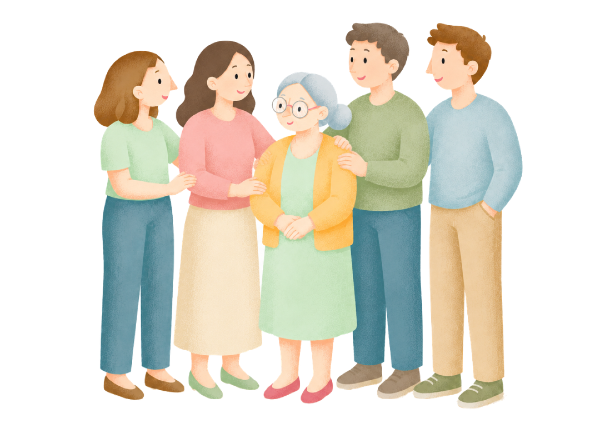
We'll start by getting to know the person being cared for. Their early life, their career, their retirement, and their interests. We'll also ask about their family and friends, and who we should contact in an emergency. This isn't just small talk — it helps us understand the context of your life and the support network around you.
Daily schedule

What does a typical day look like for them? When do they like to wake up? What's their routine? What are their preferences? We'll also talk about overnight needs, so we can make sure their care fits seamlessly into their lives rather than disrupting it.
The support you need
We'll talk in detail about the kind of support you're looking for. What do they need help with? What are you hoping to get from having a carer? The more we know, the better we can support you.
Medical history and medications

We'll ask about any long-standing medical conditions, anything that needs monitoring or managing, and their current medications, including what they take and when. We'll also take contact details for their GP and pharmacy, and for any social worker or other healthcare professional involved in their care.
Food and mealtimes

This might sound like a small detail, but it matters. Would they like to eat with their carer, or would they prefer them to eat separately? It's all about making sure they feel comfortable in their own home.
An ideal carer

Who would they feel most at ease with? What qualities matter to them? Do they have a preference for a male or female carer? Does the carer need to be able to drive? These are all things we'll explore, because finding the right match is about so much more than just skills and experience.
How to prepare for your care assessment
A little bit of preparation can make the assessment even more productive. Here are a few things you might find helpful to have to hand:
- A list of any medical conditions that need mentioning
- An outline of the daily tasks the person being cared for needs help with
- A list of current medications, including when they are taken
- Any questions you have about the care process
We'll also send you a short form to complete before the assessment, covering some preliminary information.
What happens after the assessment?
Once the assessment is complete, your care manager will put together a comprehensive care plan based on everything you've discussed. This plan is person-centred and outcome-driven, with a clear focus on enhancing your health and wellbeing while improving your overall quality of life.
It's not just a document that gets filed away. It's a living plan that guides everything your carer does, and it's shared with you digitally so you can see exactly what we're working towards.
From there, we move into the matching process, involving finding you a carer who fits your needs. And because we've taken the time to really understand you during the assessment, we're able to make matches that genuinely work.
A quick note on local authority assessments
It's worth mentioning that if you're seeking funding from your local council, they will also carry out their own care needs assessment. This is a separate process, but it runs alongside what we do. The council's assessment looks at your physical, emotional, mental, and social care needs to determine whether you meet the national eligibility criteria.
Every adult in England is entitled to a care needs assessment, regardless of their financial situation. It's usually arranged through your local council's adult social care department.
We're here to support you through that process too, and our team can help you understand what to expect and how it fits together with our own assessment.
Our Family Care Advisors are here to listen, answer questions, and help you figure out the right next step, with no pressure and no obligation.
Book a care consultation or call us on 020 3970 9900.


Jamie Shie


10 Aug 2026
When One Spouse Becomes the Decision-Maker for the Other's Care
There are few harder moments in a marriage than the one where you realise your husband or wife can no longer make their own decisions, and that you must begin making them on their behalf. Whether it comes gradually with dementia, ...
Read guide
06 Aug 2026
The Sandwich Generation: Balancing Kids, Career and Ageing Parents
There is a name for the particular kind of exhaustion that comes from caring for your children and your ageing parents at the same time, while holding down a job in between. It is called being part of the sandwich generation, ...
Read guide
06 Aug 2026
Caring for a Parent From Abroad: Coordinating Care as a British Expat
Building a life overseas is something to be proud of. But when a parent back in the UK starts to need more support, living abroad brings a particular kind of worry, and a particular kind of guilt. You are hundreds or thousands ...
Read guide